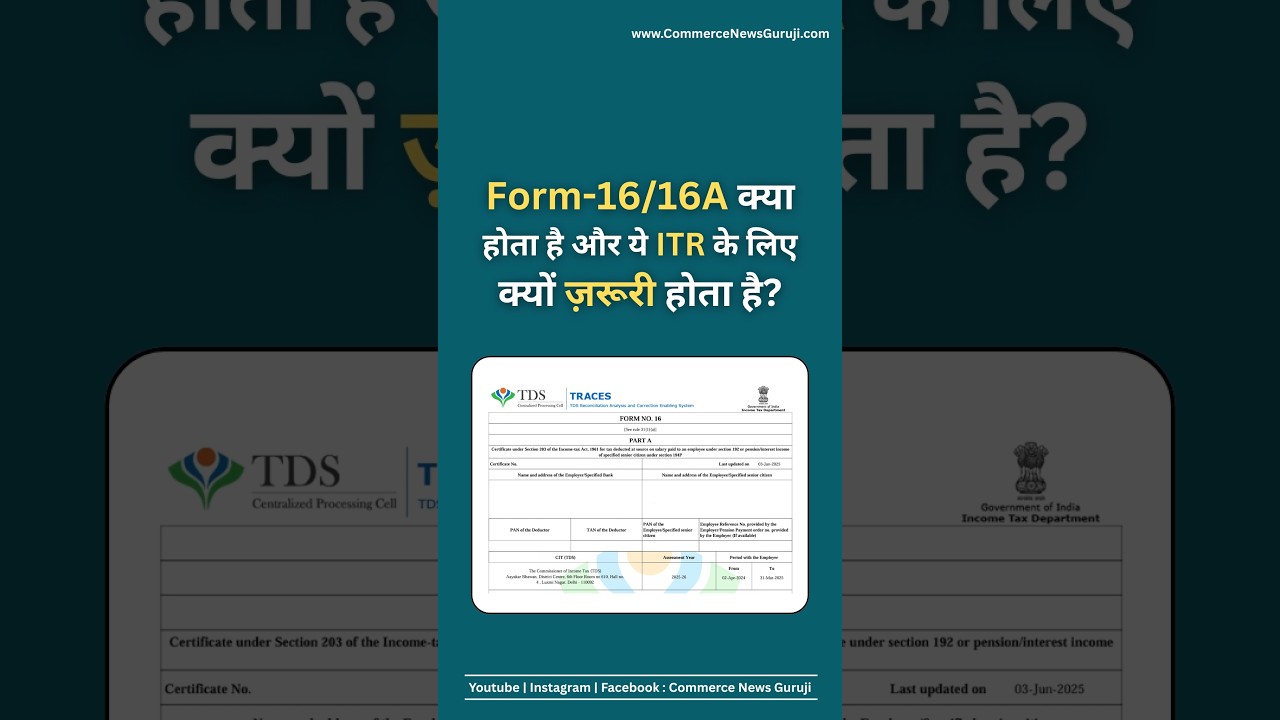
If you’re a salaried employee, you’ve probably heard about Form 16 during tax season.
For many first-time taxpayers, this document can seem confusing, especially when preparing an income tax return.
However, Form 16 is one of the most important tax documents for employees because it summarizes salary income and the tax deducted by an employer during a financial year.
Although Form 16 is closely associated with income tax filing, it also serves as proof of salary and tax compliance in many financial situations.
Understanding what it contains and how it is used can make filing your income tax return much easier.
This guide explains what Form 16 is, why it is important, and how it helps salaried employees understand their taxes.
What Is Form 16?
Form 16 is a certificate issued by an employer to an employee that provides details of:
- Salary paid during the financial year.
- Tax Deducted at Source (TDS) from salary.
- Tax deposited with the government on behalf of the employee.
- Other information required under applicable tax regulations.
In simple terms, Form 16 summarizes your salary income and the tax deducted from it during the year.
Who Issues Form 16?
Form 16 is issued by an employer to eligible salaried employees.
Generally, it is provided after the end of the financial year if tax has been deducted from the employee’s salary according to applicable tax laws.
The employer prepares the document using payroll records and TDS information reported to the tax authorities.
What Information Does Form 16 Contain?
Although the exact format is prescribed by tax regulations, Form 16 generally includes information such as:
- Employee name.
- Employer name.
- Permanent Account Number (PAN), where applicable.
- Tax Deduction and Collection Account Number (TAN) of the employer.
- Salary paid during the financial year.
- Tax deducted from salary.
- Tax deposited with the government.
- Eligible deductions and exemptions reported through payroll, where applicable.
The information helps employees understand how their taxable salary has been calculated.
Parts of Form 16
Form 16 is generally divided into two sections.
Part A
Part A typically contains:
- Employer details.
- Employee details.
- PAN and TAN information.
- Summary of Tax Deducted at Source (TDS).
- Details of tax deposited with the government.
This section primarily focuses on TDS information.
Part B
Part B usually contains:
- Detailed salary breakup.
- Allowances included in salary.
- Eligible deductions considered through payroll.
- Taxable income calculation.
- Tax liability computation.
Together, these sections provide a comprehensive summary of salary income and tax deductions for the financial year.
Why Is Form 16 Important?
Form 16 is valuable because it organizes important tax information into a single document.
It helps employees:
- Understand their annual salary.
- Review tax deducted from salary.
- Verify tax deposited by the employer.
- Prepare an income tax return more easily.
- Maintain organized tax records.
Having accurate salary and tax information reduces the likelihood of mistakes while filing a tax return.
Is Form 16 Mandatory for Filing an Income Tax Return?
Not always.
While Form 16 makes tax filing much easier for salaried employees, the legal requirement to File an income tax return depends on the applicable tax laws and an individual’s circumstances.
If Form 16 is unavailable, taxpayers may still be able to prepare their return using other valid income and tax records, provided they accurately report all required information.
When Do Employees Usually Receive Form 16?
Employers generally issue Form 16 after the end of the financial year and within the timeline prescribed under applicable tax regulations.
Once received, employees should review the information carefully and keep the document safely because it may be useful for tax filing and future financial documentation.
How Form 16 Helps While Filing Your Income Tax Return
Form 16 serves as a useful reference when preparing an income tax return because it summarizes many of the salary-related details required for tax filing.
It can help you verify:
- Salary received during the financial year.
- Tax deducted from salary.
- Eligible deductions considered by your employer.
- Taxable salary calculation.
- Employer information.
Although you should still review all information carefully, Form 16 makes the filing process much simpler for many salaried employees.
Verify the Information in Form 16
Before using Form 16 for tax filing, review it carefully.
Check details such as:
- Your name.
- Permanent Account Number (PAN), where applicable.
- Employer’s information.
- Salary details.
- Tax deducted.
- Financial year.
- Deduction details included by your employer.
If you notice any errors, contact your employer before filing your tax return.
Correct information helps avoid unnecessary complications during tax processing.
What If You Change Jobs?
Many employees change employers during the financial year.
In such cases, you may receive a separate Form 16 from each employer who deducted tax from your salary.
When preparing your income tax return, ensure that income from all employers is considered according to the applicable tax rules.
Using only one Form 16 may result in incomplete reporting.
What If You Don’t Receive Form 16?
There may be situations where an employee does not receive Form 16.
Possible reasons include:
- No tax was deducted from salary.
- Employment ended before the document was issued.
- Administrative delays.
- Other circumstances specific to the employer.
Even without Form 16, taxpayers remain responsible for accurately reporting income if an income tax return is required under applicable laws.
Alternative salary records and tax documents may help prepare the return.
Keep Form 16 Safe
Form 16 is useful beyond tax filing.
It may also be requested when applying for:
- Home loans.
- Personal loans.
- Credit cards.
- Visa applications.
- Financial verification.
- Other situations requiring proof of salary or tax compliance.
Keeping copies of Form 16 with your financial records is therefore a good practice.
Practical Example
Imagine an employee works for one company throughout the financial year.
The employer deducts tax from the employee’s monthly salary and deposits it with the government according to tax regulations.
After the financial year ends, the employer issues Form 16 summarizing:
- Total salary paid.
- Tax deducted.
- Eligible deductions considered.
- Taxable income calculation.
The employee then uses this information while preparing the income tax return, reducing the chances of reporting errors.
Common Misconceptions About Form 16
Many first-time taxpayers misunderstand the purpose of Form 16.
Myth: Form 16 Is the Income Tax Return
No.
Form 16 is a tax certificate issued by your employer.
It is not your income tax return.
Myth: Only High-Income Employees Receive Form 16
Eligibility depends primarily on whether tax has been deducted from salary according to applicable tax laws rather than on income alone.
Myth: Form 16 Guarantees You Don’t Need to Verify Your Tax Return
You should always review your financial information carefully before filing, even if you have received Form 16.
Myth: Losing Form 16 Means You Cannot File Taxes
Although Form 16 is extremely helpful, taxpayers may still be able to prepare an accurate return using other valid salary and tax records when necessary.
Common Mistakes to Avoid
Form 16 makes income tax filing easier, but relying on it without reviewing the details can lead to mistakes.
Some common errors include:
- Assuming Form 16 is the same as an income tax return.
- Not checking personal details such as your name or PAN.
- Ignoring errors in salary or Tax Deducted at Source (TDS) information.
- Forgetting to include income from another employer during the same financial year.
- Filing your tax return without reviewing deductions and exemptions separately.
- Misplacing Form 16 after tax filing.
- Assuming Form 16 is unnecessary once the return has been submitted.
Carefully reviewing your Form 16 before filing can help prevent unnecessary delays and corrections.
Tips for Using Form 16 Effectively
To make the most of Form 16, follow these simple practices:
- Verify all personal and employer details.
- Compare salary information with your salary slips if needed.
- Check that the TDS details are accurate.
- Keep both digital and printed copies for future reference.
- Store Form 16 with your other important tax documents.
- Review it every year before filing your income tax return.
- Contact your employer promptly if any information appears incorrect.
Organized financial records make future tax filing much easier.
Frequently Asked Questions
What is Form 16 used for?
Form 16 is a certificate issued by an employer that summarizes salary paid and Tax Deducted at Source (TDS) during a financial year.
It helps salaried employees prepare their income tax returns and serves as proof of salary and tax deduction.
Is Form 16 mandatory for filing an income tax return?
Not necessarily.
Form 16 is a helpful document, but filing requirements depend on the applicable tax laws and your individual circumstances.
If Form 16 is unavailable, you may still be able to prepare your return using other valid salary and tax records.
Who issues Form 16?
Form 16 is issued by an employer to eligible salaried employees after the end of the financial year when tax has been deducted from salary according to applicable regulations.
What should I do if there is a mistake in my Form 16?
Contact your employer as soon as possible and request a corrected Form 16 before filing your income tax return.
Correct information helps prevent processing delays and reporting errors.
Can I receive more than one Form 16?
Yes.
If you worked for multiple employers during the same financial year and each employer deducted tax from your salary, you may receive a separate Form 16 from each employer.
Should I keep Form 16 after filing my taxes?
Yes.
Form 16 is an important financial document that may be useful for future tax filings, loan applications, visa processing, income verification, and maintaining organized financial records.
Conclusion
Form 16 is one of the most important documents for salaried employees because it provides a clear summary of salary income and Tax Deducted at Source (TDS) for a financial year.
It simplifies the income tax filing process by bringing together key salary and tax details in a single document while also serving as valuable proof of income and tax compliance.
Although Form 16 is extremely useful, it should always be reviewed carefully before filing your income tax return.
Checking the accuracy of your personal information, salary details, and TDS records can help prevent filing errors and unnecessary delays.
By understanding how Form 16 works and keeping it safely with your financial records, you’ll be better prepared not only for tax filing but also for future financial needs such as loan applications, income verification, and other official documentation.
Developing the habit of reviewing and organizing tax documents each year is an important step toward effective personal financial management.